top of page

For as long as I've been involved in the world of fine miniatures, one thing has remained true: learning has always been at the heart of this hobby. Long before YouTube videos, Instagram tutorials, and online communities, aspiring miniaturists traveled across the country—and sometimes across the world—to learn from master artisans. Organizations like the International Guild of Miniature Artisans (IGMA) and the National Association of Miniature Enthusiasts (NAME) built a culture where knowledge wasn't just shared; it was preserved and passed from one generation of makers to the next.

Their annual schools, regional workshops, and educational retreats have trained thousands of artisans and hobbyists over the decades. Events like The Guild School (Castine, ME), NAME's educational offerings, and international events like Miniatures in Tune summer programs in the Netherlands have long been destinations for miniature enthusiasts eager to improve their skills. Smaller, but no less intensive, local events occur in Williamsburgh, Tuscon and at the KSB Museum in Maysville, KY. Workshops at international shows like Tom Bishop Show and the Philly Show have been a staple of the show circuit That tradition remains as strong as ever. But lately, I've noticed something else exciting that's happening. Miniature education is expanding beyond the traditional miniature community.

Miniatures Are Becoming an Experience

For years we've watched people gather for paint-and-sip nights, pottery studios, candle-making classes, floral arranging, woodworking, and countless other hands-on creative experiences. These events aren't necessarily about becoming professional artists—they're about making something beautiful, learning a new skill, and enjoying the creative process.

Now, miniatures are joining that movement. Recently, a Boston-based creative events company called Homesy offered a miniature-making workshop as part of its lineup of hands-on experiences. Many of the people attending probably weren't longtime miniature collectors. They were simply looking for a fun, creative evening. And that's exactly what makes this so exciting. Someone who has never even heard of artisan dollhouse miniatures might walk into one of these workshops out of curiosity... and walk out completely captivated by the miniature world.

Miniature Artisans as Teachers

Another trend I've been seeing is individual artists embracing education as part of their creative careers to a more commercial audience. Instagram creator Andi Vinciquerra from TrialSizeDoveBar recently held an "Enchanted Forest Book Nook" workshop in Brooklyn, inviting participants to build their own whimsical miniature scene. It's a wonderful example of how artists and social media creators are introducing entirely new audiences to miniature-making. Taylor Laufersweiler from House of Viridian Miniatures also recently held a workshop at Nocturn, a decorative arts boutique in Salem, Massachusetts to a sold out crowd.

Across the Atlantic, internationally respected and talented artisans Christina Hampe and Danielle Falvo are collaborating on an intensive three-day workshop in Germany devoted to creating incredibly realistic miniature foods. That kind of collaboration would have been exciting years ago. Today, it also represents something larger. Artists are realizing that teaching doesn't compete with their work, it strengthens it. Every student becomes an ambassador for the art form.

A More Accessible Hobby

Perhaps the biggest change I'm seeing is accessibility. For decades, finding high-quality miniature instruction often meant belonging to a club, knowing the right people, traveling to conventions, or waiting for annual schools. Today, folks can discover miniature artists on Instagram, watch demonstrations on YouTube. join online workshops, travel to specialty retreats and attend local creative events. Or they can simply sign up for a weekend class because it sounds like fun. And they are happening all over the world, as far away as Latvia. Look for news from Small Stuff about upcoming workshops and events related to miniatures! The barriers to entry are lower than they've ever been. That's good news for everyone and even better for the miniatures world!

Workshop by Zeheh LaLji in India

Every Workshop Builds Our Community

Not everyone who takes a workshop will become a miniatures enthusiast or even a professional miniature artisan. Some will simply discover the joy of miniatures and the fun of making one tiny project. Others will discover a lifelong passion. Some will become collectors. Some will become future teachers. Others may eventually create museum-quality work that inspires generations to come. Every workshop creates more than a finished miniature. It creates appreciation, understanding and to some, It creates confidence. And perhaps most importantly, it creates new people who fall in love with this remarkable art form.

A Bright Future

What gives me hope isn't simply that there are more workshops. It's where they're happening. They're taking place inside our traditional organizations that have carried this hobby for decades. They're being offered by individual artisans eager to share their expertise. They're appearing in creative studios, community spaces, and cities that may have never hosted miniature workshops before. The old foundations remain strong. But now, they're being joined by something new. More teachers. More opportunities. More accessibility. More curiosity. And more people discovering that creating something tiny can bring enormous joy. To me, that's a wonderful sign for the future of miniatures. We're not simply preserving an art form anymore.We're growing it!


###

One of the things I love most about collecting miniatures is that there isn't just one "right" way to enjoy them. When people outside the hobby think of miniatures, they almost always picture a dollhouse. While dollhouses are certainly a beloved part of our world, they're only one of many ways collectors choose to display and interact with their collections. Our miniature collections often become extensions of our personalities. Some of us love historical accuracy. Others prefer storytelling. Some enjoy changing displays with the seasons, while others simply love surrounding themselves with beautiful tiny works of art.

Here are just a few of the many ways collectors bring their miniature worlds to life.

The Classic Dollhouse

For many collectors, the dollhouse is the heart of the hobby. Room by room, floor by floor, each space is carefully furnished, decorated, and refined over time. Some homes faithfully recreate a particular historical period, while others reflect a dream home or an entirely imaginary world. For many, the joy comes from continually improving each room, always finding one more perfect piece.

Room Boxes & Diorama

One Perfect Space

Not every collector wants an entire house. Room boxes allow you to concentrate on a single beautifully designed room—a Victorian parlor, a cozy library, a country kitchen, or perhaps an elegant bedroom. Because they're smaller, room boxes are easy to rearrange and update whenever inspiration strikes. They also allow collectors to focus on the tiniest details without feeling overwhelmed by an entire structure.

Curated Shelves

My Favorite Way to Collect

This is how I personally enjoy my miniatures.

Rather than placing everything inside a structure, I love creating themed shelves that evolve over time. Whenever I discover a wonderful new piece, I can immediately incorporate it into the display. Today I have a Renaissance shelf, a lady's boudoir shelf, a Colonial and Primitive Folk Art shelf, and a kitchen shelf filled with tiny foods and culinary treasures. The displays are never truly finished—and that's exactly what I love about them. They're constantly changing, growing, and surprising me.

Glass Display Cabinets

A Personal Miniature Museum

Many collectors choose to display their treasures in glass-front cabinets or curio cases.

These displays protect delicate miniatures from dust while allowing every piece to be appreciated. Walking past a beautifully arranged cabinet can feel like strolling through a tiny museum, where every shelf reveals another collection of extraordinary craftsmanship.

Shadow Boxes

Miniature Art for the Wall

Long before elaborate dollhouses became popular, shadow boxes offered another wonderful way to display miniatures. Many people remember kitchen-themed shadow boxes hanging on the wall, filled with tiny utensils, cookware, and pantry items. Today, shadow boxes remain a charming way to create compact themed displays that double as wall art.

Seasonal Displays

Celebrating the Year in Miniature

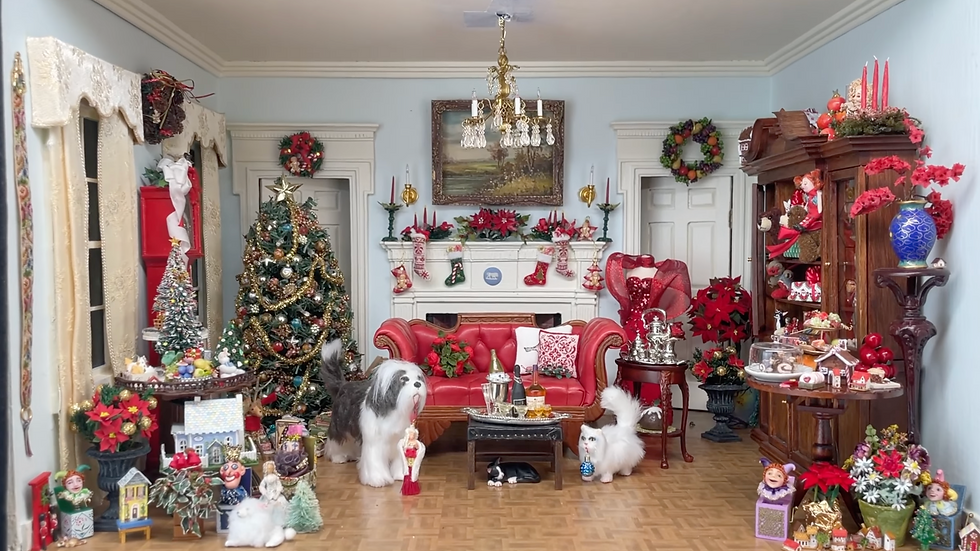
Some collectors love changing their displays with the seasons. Christmas rooms sparkle with tiny decorations. Halloween scenes become delightfully spooky. Spring gardens bloom. Valentine's displays celebrate romance. Some collectors even create nurseries, baby rooms, or displays inspired by treasured family memories. These miniature scenes become traditions that collectors look forward to revisiting year after year.

Specialty Collections

Celebrating One Tiny Passion

Not every collection needs to be large. Some collectors focus on just one category they absolutely love. Perhaps it's miniature chairs, teapots, books, sewing tools, teddy bears, lamps, animals, or tiny foods. There's something wonderfully satisfying about seeing dozens of variations of a single object displayed together. A focused collection often tells an even richer story than a larger, more varied one.

There Is No Wrong Way

One of the greatest joys of miniature collecting is that no two collections are exactly alike.

Whether your treasures live inside a dollhouse, fill a room box, tell stories in a diorama, decorate a shelf, sparkle inside a glass cabinet, hang in a shadow box, or celebrate the changing seasons, they're all expressions of the same passion. In the end, miniatures aren't just tiny objects. They're memories, works of art, conversations, discoveries, and little moments of happiness that become part of our everyday lives. And perhaps that's the real magic of collecting them.


###

One of the greatest privileges of handling an estate collection, especially one of this size and depth, is discovering the pieces that stop you in your tracks, not because of their size, but because of the imagination, craftsmanship, and countless hours they represent.

As I've worked through the Lucy Ungerman Seiler Collection, I've photographed and handled hundreds upon hundreds of wonderful miniatures. Yet every so often, a piece appears that reminds me why collectors devote a lifetime to this hobby. These aren't simply dollhouses. They are architectural sculptures. They are stage sets. They are works of art.

Among everything in Lucy's collection, six structures stand apart as true centerpieces.


The Storytbook Tudor House

Tudor houses have always held a special place in miniature collecting, but this one is exceptional. Constructed with remarkable structural integrity and an astonishing combination of wood, stone, plaster, and architectural detailing, this delightful residence feels as though it could have stood for centuries.

The extensive timber framing, richly textured masonry, steep rooflines, decorative chimneys, handcrafted windows, and carefully finished interiors demonstrate a level of craftsmanship that is rare and has become increasingly uncommon.

This is the type of miniature house that collectors build an entire collection around. Rather than finding furniture for a dollhouse, you find a dollhouse worthy of your finest furniture!


The Alpine Chalet

There is something instantly comforting about a beautifully executed Alpine chalet retreat. It evokes vacation retreat and respite, mountain villages, crackling fireplaces, heavy timber construction, and generations of family history and memories.

This Alpine chalet in miniature, likely designed by the iconic Bluette Meloney and built in one of her legendary workshops by Lucy herself, captures that feeling beautifully. Every roofline, balcony, timber beam, and stone detail works together to create a structure that feels authentic rather than simply decorative.

The piece has the warmth that only thoughtful craftsmanship can achieve, inviting a collector to slow down and appreciate each detail. Every angle reveals another carefully designed component . It isn't just a building—it's an atmosphere.


The Grand Theater Room Box

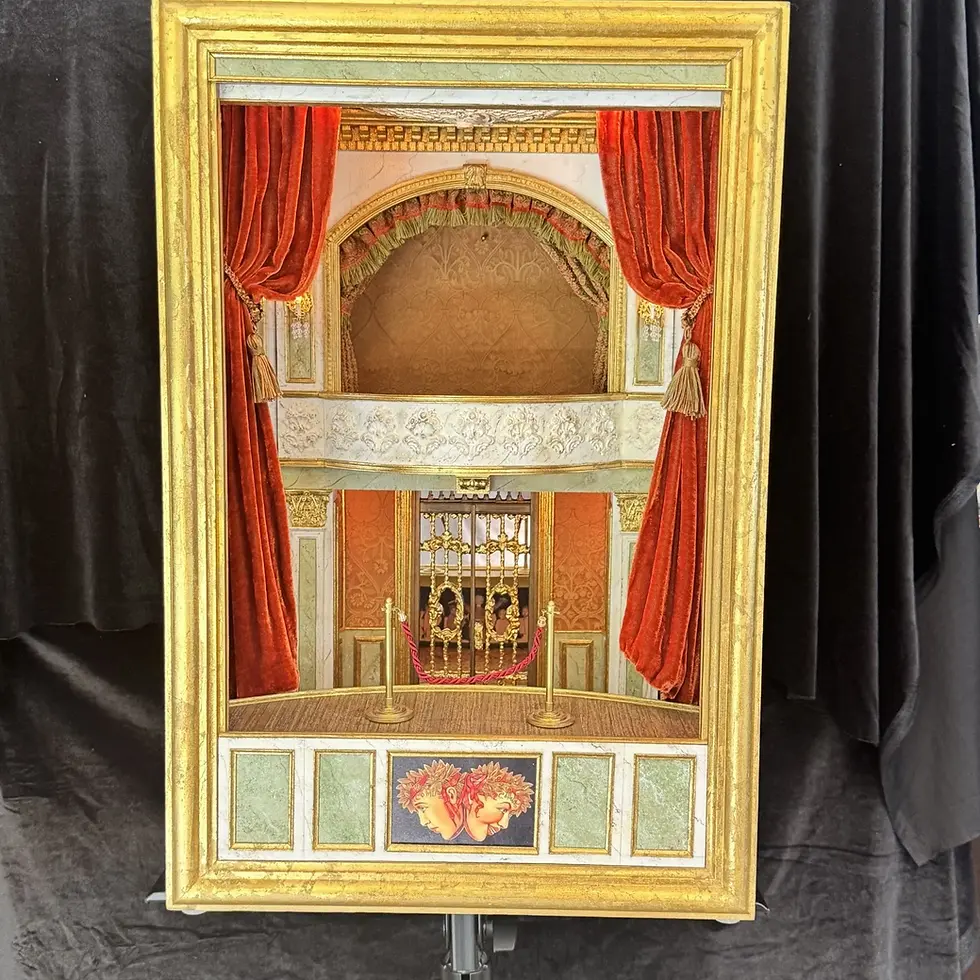
Perhaps the most theatrical piece in the collection—literally—is the magnificent miniature theater room box, believed to also have been designed by Bluette Meloney and constructed by Lucy during one of Bluette's celebrated workshops.

From its Florentine-inspired façade with decorative comedy and tragedy masks design to its marbleized columns, mirrored side panels, velvet stage curtains, raised performance stage, brass rope stanchions, richly textured carpeting, and illuminated interior, everything about this piece celebrates drama.

It's impossible not to imagine an audience waiting for the curtain to rise. This isn't simply a room box, it's a performance waiting to happen!


The Tudor Mill House


If there is one structure in Lucy's collection that feels as though it belongs in the pages of a storybook, it is undoubtedly the extraordinary Tudor-style mill house. Standing approximately three feet tall, this remarkable two-story structure combines the romance of medieval architecture with the charm of a historic watermill.

Stone walls, heavy timber framing, decorative tile roofing, a drawbridge over water, a massive mill wheel, and beautifully textured masonry immediately command attention.

Then the details begin to emerge: a double-door entrance framed by stone sconces.

A towering fireplace running through both floors. Carved gargoyles watching from architectural ledges. A tiny bluebird's nest tucked beneath a gable window.

The more you study it, the more you discover, it feels less like a dollhouse more like a miniature building rescued from another century.


The Three-Story Row House Residence

Some dollhouses impress because they're elaborate. Others impress because they're believable.

This three-story residence manages to do both. With six thoughtfully designed rooms , finished hardwood, brick and tiled flooring, decorative moldings, wallpapered interiors, and architectural continuity from room to room, the house possesses the feeling of a real home that simply happens to exist in miniature.

Every floor invites exploration. Every room suggests another story. The beauty of a house like this is that it gives its future owner endless possibilities. Whether furnished as a grand Victorian residence, a country home, or something entirely unique, it becomes a canvas for creativity.


"Going Down" — The Titanic Room Box

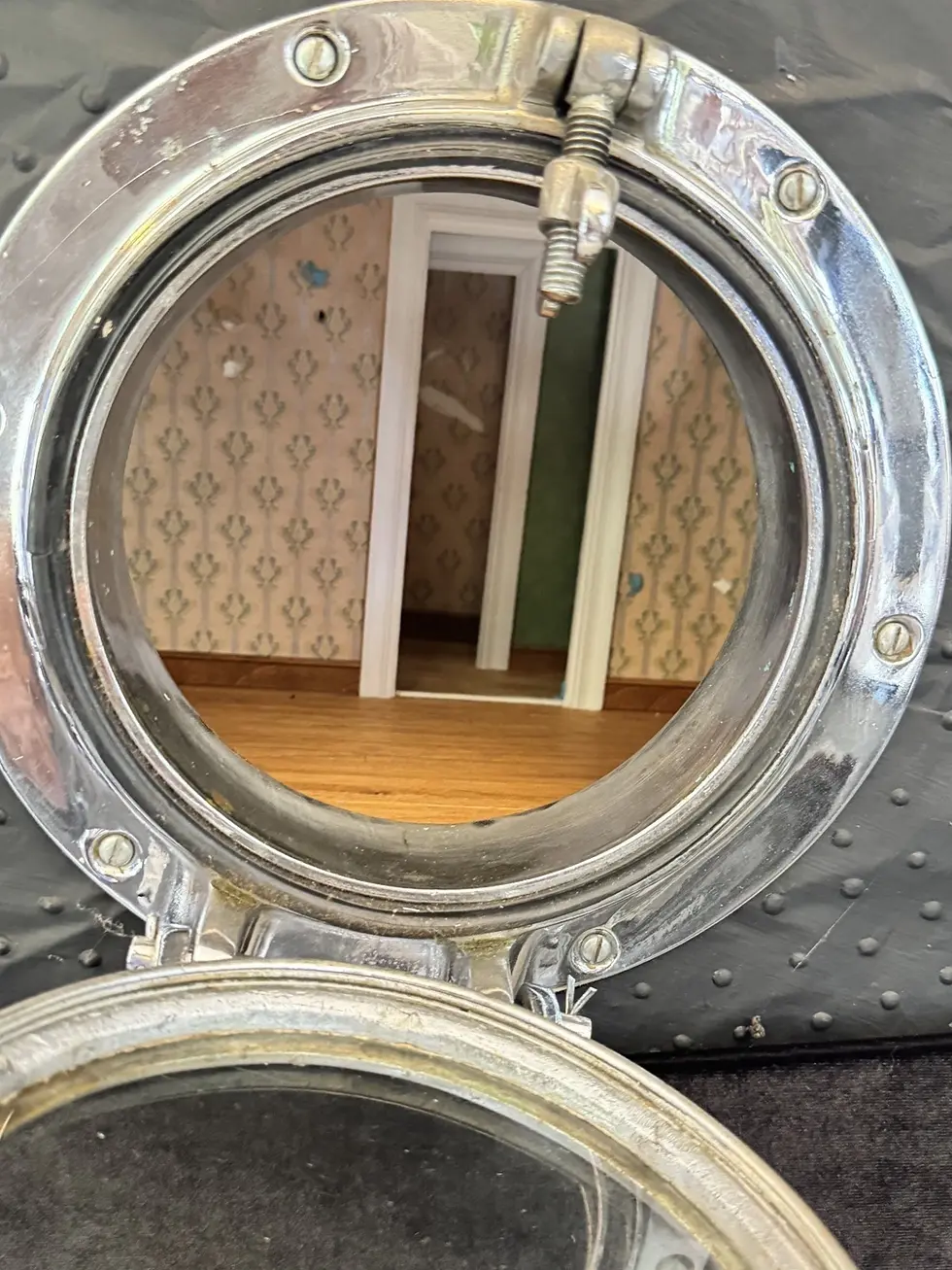
Few miniature artists have successfully captured emotion the way Marnie King accomplished with "Going Down." Viewed through an authentic metal porthole, the viewer peers directly into a first-class stateroom aboard the RMS Titanic during its final moments.

The room itself is elegant. The story behind it is heartbreaking. Built at a dramatic angle to recreate the sinking ship, every furnishing, every architectural detail, every carefully selected accessory contributes to a narrative that nearly everyone recognizes instantly.

It isn't simply historical. It is cinematic. It is cinematic. This is one of those rare miniatures that causes people to stop talking and simply look.


More Than Buildings and Structure

As I was preparing these structures for auction, I was reminded that the finest miniatures are never just about craftsmanship. They're about imagination and potential. They represent thousands of hours of planning, designing, building, painting, aging, and refining until every corner feels believable. And then a new owner comes by and makes it their own.


Lucy Seiler clearly understood that. She collected pieces that transported her somewhere else. Whether it's a mountain village, a medieval mill, an elegant Tudor manor, a grand theater, a family residence, or the deck of the Titanic, each structure creates an entire world within just a few square feet.


Collectors often ask me what makes a great miniature. My answer is always the same.

A great miniature makes you forget its small and makes youi feel something big . These six extraordinary structures do exactly that!


###

bottom of page