top of page

If you’ve ever wondered what happens when one of the world’s most passionate miniature collectors collaborates with one of the hobby’s most respected architectural builders, the answer is nothing short of extraordinary! In a recent episode of Meet the Miniaturist, I had the pleasure of sitting down with collector Suzanne Crowley (@suzannesminis) and master builder Jon Fish (Jon Fish Miniatures). We explored one of the most breathtaking miniature projects I’ve ever encountered: a magnificent French château-inspired dollhouse years in the making. The result is more than a dollhouse; it's a work of true fine art in small scale.


A Miniature Collection Built on a Lifetime of Passion


Suzanne Crowley’s love affair with miniatures began as a child. Her grandmother, a talented china painter, gifted her hand-painted miniature treasures. That early fascination blossomed into a lifelong journey, leading Suzanne to become one of the hobby’s most extensive collectors.


Today, her dedicated miniature room houses an extraordinary collection of artisan-made dollhouses, room boxes, furnishings, and one-of-a-kind commissioned pieces from some of the finest miniature artists in the world.


What makes Suzanne’s collection particularly special is that every piece has been very carefully and thoughtfully chosen. Rather than simply acquiring miniatures, she curates stories, interiors, and environments that evoke emotion, history, and imagination.


The 40-Year Friendship Behind the Château


One of the most compelling aspects of this project is the decades-long friendship between Suzanne Crowley and Jon Fish. The two first met nearly forty years ago through the miniature community. They quickly developed a creative partnership built on mutual respect, trust, and a shared passion for excellence.


When Suzanne decided she wanted to move beyond room boxes and create a grand French château, there was only one builder she wanted for the project: Jon Fish. Known for his architectural expertise, handcrafted details, and museum-quality construction, Jon brought Suzanne’s vision to life while adding his own creative ingenuity throughout the process. This collaboration demonstrates something unique about the miniature hobby: the best projects often emerge when talented artists build upon each other’s ideas.


Inspired by the Great Houses of France


The château itself draws inspiration from the elegant townhouses surrounding Paris’s historic Place des Vosges as well as several notable French estates and interiors. From the moment you see the exterior, the attention to detail is breathtakingly remarkable. Hand-finished brickwork, custom architectural moldings, gold-leaf embellishments, and authentic proportions create a stunning visual experience. Layered faux finishes throughout are designed to create visual lift and depth of illusion.


Jon explained during our conversation that even subtle details—such as gradually lightening exterior finishes toward the upper floors—help create the illusion of height and grandeur. These techniques separate a beautiful dollhouse from a truly masterful miniature structure.


A House Years in the Making


Unlike many miniature projects, this château wasn’t completed in a matter of months. It evolved over several years. As Jon worked between other commissions and major museum projects, the house continued to grow in sophistication and complexity. Suzanne jokingly referred to it as “Jon’s Folly” because the project became more elaborate, more detailed, and more beautiful over time. In many ways, the extended timeline became an advantage. It allowed Suzanne to continually refine her vision, discover exceptional artisan pieces, commission custom furnishings, and replace earlier selections with increasingly extraordinary works. The result is a miniature environment where every room feels fully realized.


Luxury Interiors in Miniature


Step inside the château, and you’ll discover a series of richly appointed interiors inspired by historic French design, contemporary luxury decorating, and some of the world’s finest miniature artisans. Highlights include:


The Grand Salon


Inspired by rooms found in notable French châteaux, the salon features exquisite wall paintings, elegant furnishings, and carefully layered decorative details that immediately draw the eye.


The Library


One of the home’s most memorable spaces, the library incorporates custom cabinetry, artisan furnishings, and one of the château’s most intriguing secrets.


The Bedrooms


The château’s bedrooms blend French elegance with sophisticated color palettes, custom upholstery, museum-quality furniture, and architectural details designed specifically for each room.


The Contemporary Kitchen and Dressing Room


Rather than creating a strict historical recreation, Suzanne envisioned a home that exists in the present day—a residence belonging to someone who appreciates antiques, art, and exceptional interior design. The result is a stunning blend of classic architecture and modern luxury.


Hidden Rooms and Secret Features


One of my favorite aspects of the château is the inclusion of hidden spaces and secret architectural surprises. Behind a sliding bookcase lies a concealed room. Additional hidden alcoves and unexpected architectural details reward careful observation. These elements bring a sense of discovery to the house and reflect Jon’s love of theatrical storytelling through architecture. It’s a reminder that great miniatures aren’t simply scaled-down objects; they’re experiences.


The Finest Miniature Artisans Working Together


Another remarkable aspect of this project is the sheer number of accomplished miniature artisans whose work appears throughout the château. Custom furnishings, paintings, upholstery, flowers, rugs, tablescapes, decorative accessories, and architectural details come together to create an environment that feels both cohesive and deeply personal. Each room serves as a showcase not only for Suzanne’s collecting eye but also for the incredible talent that exists within the world of artisan miniatures. This collaborative spirit has always been one of the miniature hobby’s greatest strengths.


Why Miniatures Bring So Much Joy


One topic that resonated throughout our conversation was the emotional connection collectors have with miniatures. Suzanne described the simple joy of handling miniature objects, arranging displays, creating vignettes, and continually reimagining interiors. For many collectors, miniatures provide a creative outlet, a source of comfort, and an opportunity to build beautiful worlds on a scale that feels both intimate and magical. It’s perhaps one reason the hobby experienced such a surge of interest during recent years. People crave creativity. They crave beauty. And they crave the satisfaction of making something uniquely their own.


What’s Next?


As impressive as the château is, Suzanne isn’t finished. Far from it! Like many collectors, she continues to refine rooms, commission new pieces, and experiment with fresh arrangements. A new masterpiece dollhouse by Robert Dawson from The Model Room (shown below) was just delivered, and work is underway for Suzanne to decorate it! Already, a new collaboration with Jon Fish is on the horizon: a flower shop and conservatory-inspired project that promises plenty of glass, light, flowers, baskets, and architectural charm. Knowing these two creative forces, I have no doubt it will be spectacular.


Watch the Full Interview


The story behind this miniature French château is ultimately a story about friendship, artistry, collaboration, and imagination. Whether you’re a collector, artisan, dollhouse enthusiast, or simply someone who appreciates extraordinary craftsmanship, I think you’ll find inspiration in Suzanne Crowley and Jon Fish’s creative journey. I invite you to watch the complete Meet the Miniaturist interview and experience this remarkable miniature masterpiece for yourself. Because sometimes the smallest worlds tell the biggest stories.


A BIG thank you to Suzanne and Jon for joining me to share their thoughts and treasures and for giving us a glimpse into this wonderful world of fine art miniatures!

Some miniatures are pristine. Others are perfectly imperfect. I have learned to appreciate both.

Hardwood Sewing Stand with Broken Foot on One Leg

Over the years, going through estate collections filled with small-scale treasures, I have really come to appreciate what I call “magnificent miniature misfits.” In a hobby where so much attention is placed on perfection, it is easy to overlook a wonderful piece because of one tiny flaw. But honestly, some of these imperfect pieces still have so much beauty, charm, usefulness, and life left in them.

Cranberry Glass by Philip Grenyer with Glue Markings on Back

Recently, while working on the Lucy Seiler Collection, I found myself thinking about this quite a bit. There was a beautiful chandelier missing just one candle arm. A handcrafted cat sculpture with a small crack in its tail. Pieces of artisan pottery with tiny chips along the edges. None of these flaws erased the artistry of the work itself. In many ways, they actually made the pieces feel more real and more human.


After all, real homes are not perfect either.

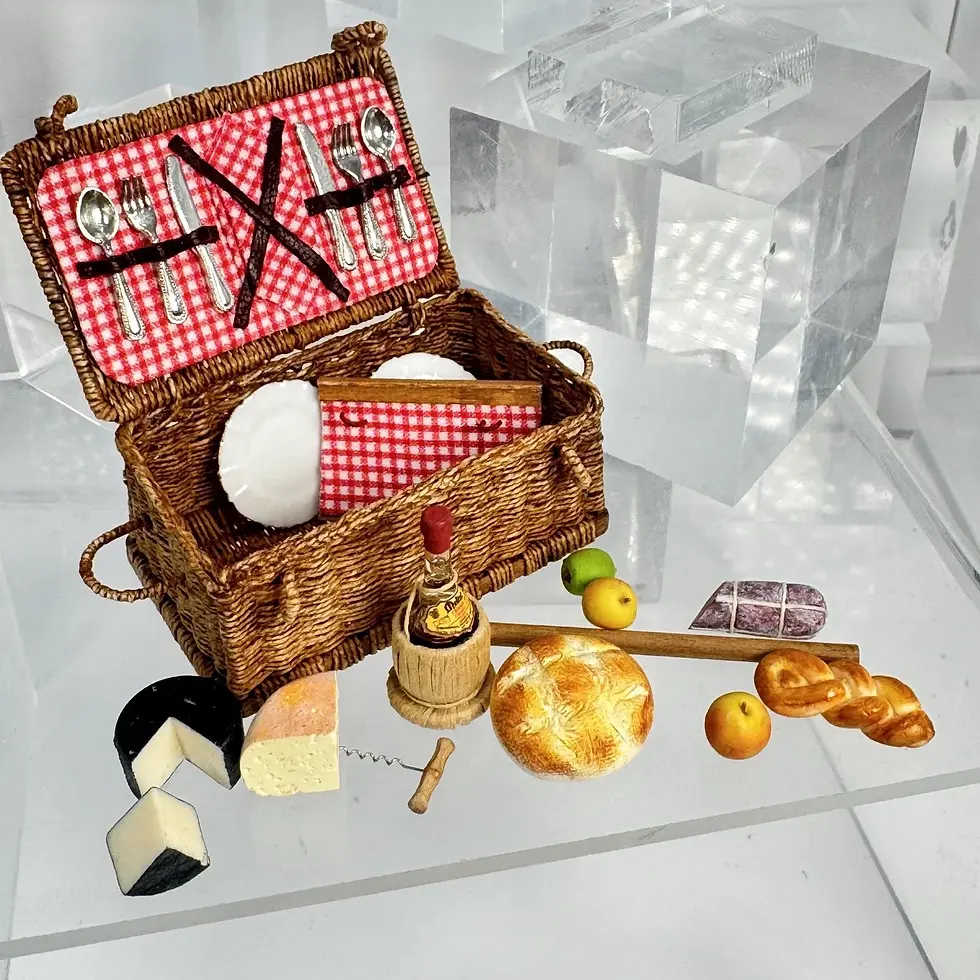
Handwoven Picnic Basket by Unknown Maker with Missing Accessories

Full-sized antiques get chipped, repaired, worn, and lovingly used over time. Why should miniatures be any different? Depending on the imperfection, a tiny flaw can sometimes add character and realism to a scene rather than take away from it.

8 Arm Crystal Chandelier by Unknown Maker with Missing Candle

One of the things I love about dollhouses and miniature scenes is that there is almost always a creative way to continue using these pieces beautifully. A chipped porcelain pitcher can simply be turned slightly on a shelf so the flaw is hidden from view. A pottery bowl with a tiny nick can sit naturally in a rustic kitchen scene where it actually feels more authentic. Even that chandelier with the missing arm could still look absolutely stunning hanging over a dining table where the missing detail is barely noticed.

Fall Vignette Signed Indecipherable Signature with Crack in Tail

And honestly, it feels terrible to throw away something handcrafted and beautiful over one small imperfection and not help find it a new home where it will continue to be treasured.

Many artisan miniatures simply cannot be replaced. Some of these artists are retired. Others are no longer with us. These pieces were often made carefully by hand, one at a time, and still deserve appreciation even if they are no longer absolutely flawless.

Tudor Art Doll by C. Gates with Missing Pearls

As my own collection of miniatures grow, the more I find myself drawn to miniatures that feel loved and lived with and in. Sometimes those tiny imperfections are exactly what make a miniature feel believable, personal, and full of soul.

Pottery by J. Almeda with Crack

Maybe that is part of what makes these magnificent miniature misfits so special. They remind us that beauty does not disappear just because something has aged a little, survived a little, or carries a tiny scar from the past. Sometimes those beloved blemishes are exactly what make a miniature worth saving!

The Intersection of Art and Technology


Artificial intelligence has arrived in the world of miniatures, sparking both excitement and discomfort. Some collectors and artists are fascinated by the possibilities. Others are deeply concerned about authenticity, realism, and the blurred lines between what is imagined and what is truly handmade. The conversation is complicated, emotional, and at times even divisive. But perhaps that is because miniatures themselves are such an intensely personal art form. They are built on patience, craftsmanship, storytelling, and the human touch. Full disclosure, this blog post was written with the help of AI...


A Personal Experience with AI


Recently, I experienced firsthand how AI can sometimes be used in a meaningful and positive way. When I learned that Stephen Colbert would no longer be hosting his late-night show, I felt genuinely upset. I wanted to create something expressive and timely to share those feelings, but I also wanted it rooted in the miniature world that I love. Using AI, I was able to generate an image of a miniature television set inside a dollhouse room, with Colbert appearing on the screen during his final broadcast. It was emotional, whimsical, and immediate. It allowed me to respond creatively in a moment where building something physical by hand would have taken days or weeks — and honestly, I could not have produced the same result myself. I often use AI to express myself, as I have here as well, after learning of the tragic passing of Rob Reiner.


The Positive Side of AI in Miniatures


That is where AI can become useful. It can help people visualize ideas quickly. It can inspire scenes, moods, architecture, and compositions that might otherwise remain trapped in the imagination. In some cases, it can even help miniature artists think outside the traditional boundaries of the hobby. I have seen AI-generated concepts for dollhouses with entire front facades cut away for dramatic viewing access, impossible staircases twisting through open atriums, and wildly imaginative architectural combinations that feel fresh and exciting. Some of these concepts may never physically exist, but they can still inspire real-world makers to experiment with new ideas.


Concerns in the Miniatures Community


At the same time, there is a legitimate concern growing within the miniatures community. Some AI-generated images are so convincing that viewers believe they are photographs of real miniatures. That creates confusion, unrealistic expectations, and sometimes even disappointment. Someone scrolling social media may think a miniature room or dollhouse actually exists and can be replicated, when in reality it was generated in seconds by software. Worse still, AI images are occasionally presented in ways that imply the poster physically created the work themselves. In a field built upon countless hours of craftsmanship, that understandably frustrates artists who devote their lives to learning techniques, mastering materials, and developing their own artistic voice.


Miniatures occupy a unique place between craft, art, fantasy, and illusion. Even before AI, miniature artists were already creating worlds that blurred reality. A beautifully made room box can fool the eye. A perfectly scaled meal can look edible. A dollhouse library can feel more emotionally real than an actual room. Perhaps AI is simply another extension of that illusion-making process — but one that requires honesty and transparency from those using it. (Above: AI generated image of a dollhouse)


The Value of AI as a Tool


For me, the key may not be whether AI is “good” or “bad,” but how it is used. If AI becomes a tool for inspiration, storytelling, experimentation, or emotional expression, it can have genuine value. If it is used deceptively, or in ways that erase the labor and artistry of real makers, then it risks undermining the very heart of the miniature world. (Images above: top image is AI, bottom image is real)


The Magic of Handmade Miniatures


What makes miniatures magical has never been perfection alone. It is the human imagination behind them. AI may be able to generate astonishing images, but it cannot replace the feeling of discovering a handmade object, studying tiny brushstrokes under magnification, opening a perfectly crafted drawer, or realizing that another person spent hours — sometimes weeks — bringing a tiny world to life by hand. (AI generated dollhouse above)


The Future of Miniatures: A Harmonious Blend


Perhaps the future of miniatures will involve both: traditional craftsmanship and digital imagination existing side by side. The challenge for all of us will be learning where inspiration ends and authenticity begins.


In conclusion, embracing AI in the miniature world can open new doors for creativity and expression. It’s essential to navigate this landscape with care, ensuring that we honor the artistry and dedication that define our beloved craft. As we explore these new tools, let’s celebrate the magic of miniatures and the human stories behind them!

bottom of page