
Meet the Miniaturist: Charlotte Engstrom

An intuitive approach to light, texture, and storytelling in miniature
Charlotte Engstrom is a Sweden-based miniature artist whose work feels immediately lived-in—bright yet weathered, carefully composed yet deeply instinctual. In a recent episode of Meet the Miniaturist, Charlotte shares her personal journey into miniatures, her philosophy of working without rigid plans, and the techniques behind her biggest projects to date: a Beacon Hill–style dollhouse, a modern container home, and a converted factory space.
Rather than following rules, Charlotte builds by feel—letting light, texture, and emotion guide every decision.
Finding Miniatures Through Life’s Detours
Charlotte came to miniatures relatively recently, beginning her journey about five years ago during a period of illness that forced her to slow down and reimagine how she could create.
“I started miniatures about five years ago, so I haven’t been doing this for very long.”
What began as a way to cope soon became something far bigger. Miniatures offered her endless creative possibility—painting, building, refurbishing, and storytelling all at once.
“Everything you and I have around us—you can have in tiny, tiny size. The opportunities are actually endless.”

The Beacon Hill House: Learning by Doing
Charlotte’s Beacon Hill–style house remains her most ambitious project to date—and one she considers perpetually unfinished. She purchased the structure already half built and dark, then began transforming it with almost no plan.

“I had absolutely no idea what I was doing. And I just did it.”
Armed with basic tools, a bucket of white wall paint, and a cup of coffee, she rebuilt walls, moved windows, and worked on the interior and exterior simultaneously. The process was immersive and demanding, but deeply rewarding.
“Am I finished with the house? I will never be.”

Working Without a Fixed Plan
Charlotte doesn’t begin her projects with detailed drawings or strict end goals. Instead, she follows an intuitive path—allowing the piece to evolve as she works. “I don’t have a clear plan of the finished result. I have a path.” That openness allows her work to change direction organically.
“Sometimes the house or the furniture talks to me in another way during the process, and then I go that way instead.”
Her aesthetic reflects this freedom, blending Scandinavian brightness with subtle European influences.

“I pick a little piece of Sweden, a little piece of France, and put it together into something that’s completely my own.”
Light as the Foundation of Atmosphere
Lighting is one of the most defining elements in Charlotte’s work. Her interiors are bright, balanced, and emotionally resonant—achieved through carefully planned LED lighting.
“I go very much by the right light. I want the right feeling.” With help from her husband, Charlotte cuts and solders LED strips room by room to keep lighting clean and invisible.
“If you solder them, you don’t have LED strips lingering around. You don’t see them wrapping around the walls—and that makes a huge difference.”

Making, Refurbishing, and 3D Printing
Charlotte’s work blends refurbished commercial pieces with handmade elements. Recently, she and her husband began incorporating 3D printing into their process. One standout example is a miniature replica of a Swedish antique iron bed, digitally modeled and printed, then finished by hand. “This is a replica from a Swedish antique iron bed. It exists in the real world.” To achieve its authentic aged look, Charlotte used layered paint and real rust texture. “You can buy iron dust—it gives real texture.”

Simple Aging Techniques Anyone Can Try
Not all of Charlotte’s techniques require advanced tools. One of her favorite aging methods uses everyday materials. “Super easy, super cheap.” By dipping cotton or linen fabric into coffee and shaping it while wet, she creates naturally aged textiles perfect for scarves, bedding, or layered props.

The Container House: A Story in Miniature
Charlotte’s container home is a modern, gritty build inspired by real-life container architecture. Every surface shows wear, use, and history. “I wanted it to feel like someone living in the countryside, collecting things… maybe in some kind of survival mode.”
Packed with texture and detail, the piece reflects Charlotte’s love of storytelling through objects. “I really like doing that. It brings me joy.”

The Factory: An Evolving Creative Space
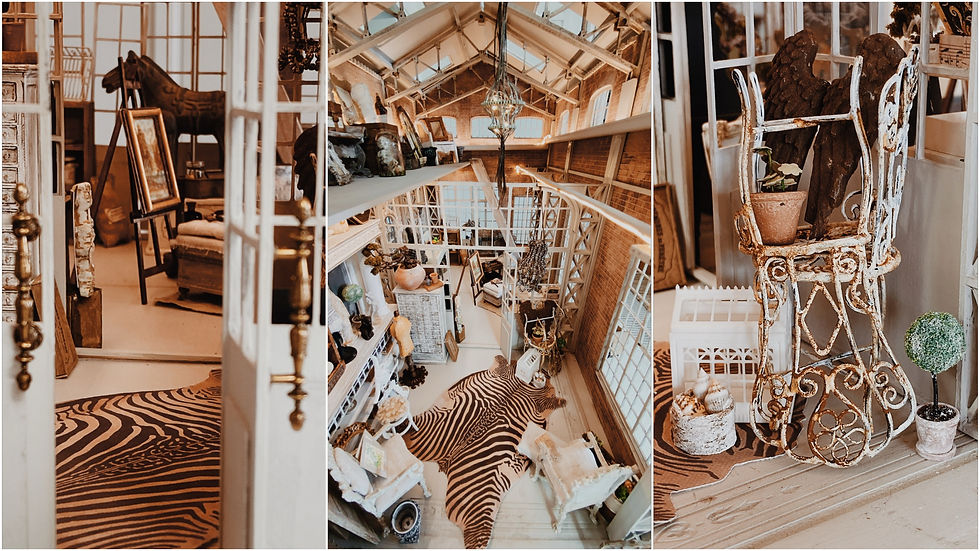
The factory began as a commercial kit, but through paint, aging, and furnishing, it became a flexible environment used for photography, staging, and experimentation. “I just do it the way I feel. It’s an ongoing project.” Charlotte uses the space as a miniature art studio—constantly reimagining its purpose and layout.

Texture, Wear, and Personal Style
While some might describe her work as gothic or industrial, Charlotte avoids labels.
“The thread through all of my work is the texture, the old, and the worn.”
She often transforms mass-produced pieces using simple methods like sanding, repainting, and distressing. “White paint and sand—that’s often all it takes.”

What’s Next
With limited space, Charlotte is looking upward for her next challenge. “I’m thinking about making some kind of tower house.” She plans to continue building furniture, creating watercolor miniatures, and collaborating with her husband on future 3D-printed pieces.

Community, Connection, and Encouragement
For Charlotte, the miniature community has been an unexpected and deeply meaningful discovery. “Learning how incredibly fantastic miniaturists there are all over the world—it’s a second world.”

Her message to newcomers is simple and welcoming: “If you’re thinking about starting the miniature hobby—welcome. It’s a fantastic place.”
Follow Charlotte Engstrom
📸 Instagram: @charlottesminiatures
Charlotte describes her work as primarily a hobby, but welcomes thoughtful inquiries via Instagram. As her projects continue to evolve, her work stands as a reminder that the most compelling miniatures are often built not from plans—but from feeling.
A BIG thank you to Charlotte for sharing her time, talents and advice for this episode. You can watch the full Meet the Miniaturist on the D. Thomas Miniatures YouTube channel (don't forget to like and subscribe!) here:


