
One of the questions I'm asked a lot is, "What do you collect?" The truth is, it's almost impossible to choose just one thing. After handling artisan dollhouse miniatures over the years through estate acquisitions, private collections, and weekly auctions, I've developed an appreciation for so many different styles of miniatures. While my interests continue to evolve, there are certain categories that consistently capture my attention. Whether you're just beginning your journey into dollhouse miniatures or you've been collecting for decades, these are ten categories that never fail to make me stop for a closer look.
1. Flowers & Plants

Nothing brings a miniature scene to life quite like beautifully crafted flowers. A simple bouquet can transform an ordinary room into something extraordinary. I especially admire artisan miniature flowers because every petal, leaf, and stem reflects incredible patience and skill. The finest examples often look as though they were picked from a real garden moments before being arranged. And one of the finest artists working today in small scale in the categroy of flowers and foods is Christina Hampe.
2. Furniture

Furniture is often where a collector first begins to appreciate true craftsmanship. From hand-cut joinery and delicate carvings to perfectly scaled proportions, artisan dollhouse furniture represents woodworking at its finest. A single exceptional chair, cabinet, or table can elevate an entire miniature collection and become the piece that draws everyone's eye. I am absolutely obsessed with tufted leather charis and sofas and cannot get enough of them into my collection... each one makes me swoon more than the other.
3. Deserts, Fruits & Vegetables
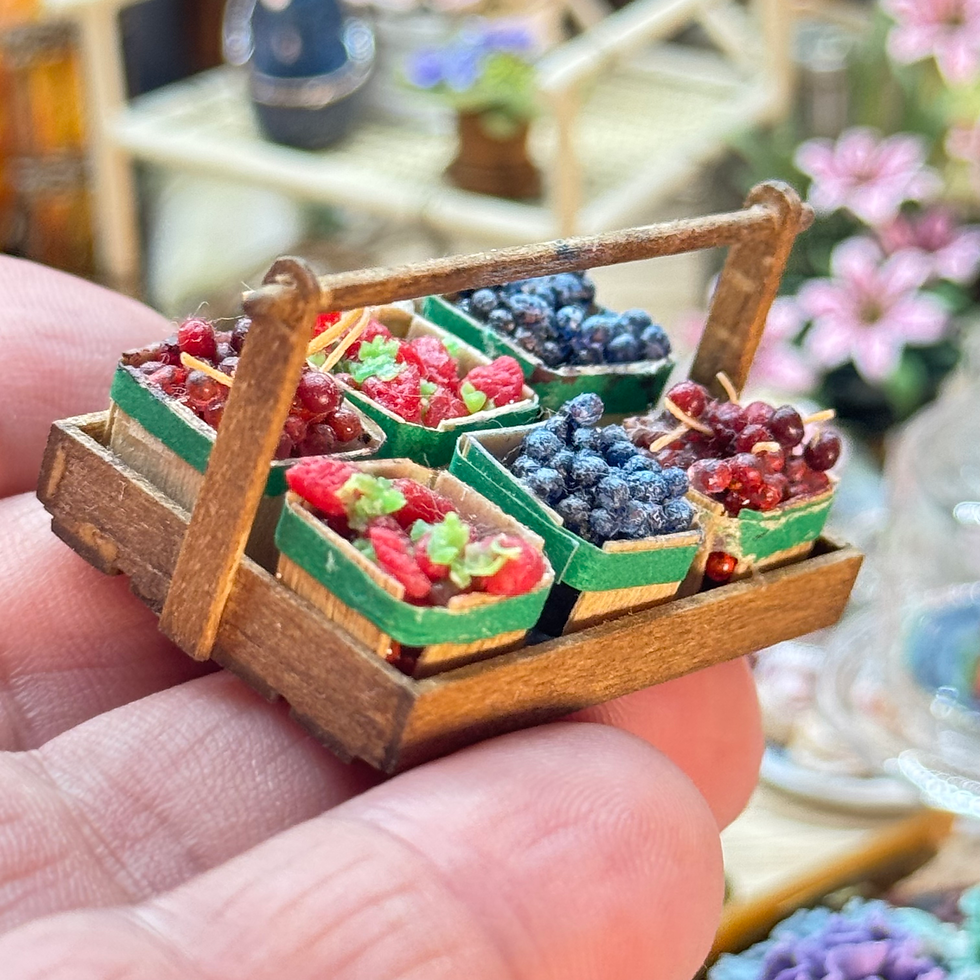
Few things make me smile more than realistic miniature food. Fresh baked bread, elaborate cakes, fruit, vegetables, and complete meals somehow capture both artistry and nostalgia in a very small space. The best food miniatures are so convincing that people often have to remind themselves they aren't real. And this assortment is chock full of detail and expression!
4. Decorative Statues, Bronzes & Porcelains

Some miniature pieces don't need a practical purpose—they simply exist to be admired. Decorative statues, bronze sculptures, and delicate porcelain figurines add personality, elegance, and a sense of history to a miniature setting. Whether it's a classical bust displayed in a library, a bronze animal on a mantel, or a graceful porcelain figurine in a drawing room, these tiny works of art create natural focal points that make a room feel curated and collected. I love discovering pieces that tell a story and invite you to pause for a closer look, proving that even the smallest decorative accents can have a remarkable presence.
5. Baskets

Handwoven miniature baskets have always fascinated me. Creating something so delicate at such a tiny scale requires extraordinary talent. I love finding baskets filled with flowers, fruit, sewing supplies, or simply displayed on their own as works of art. They prove that even everyday household objects can become collectible masterpieces.
6. Sterling Silver
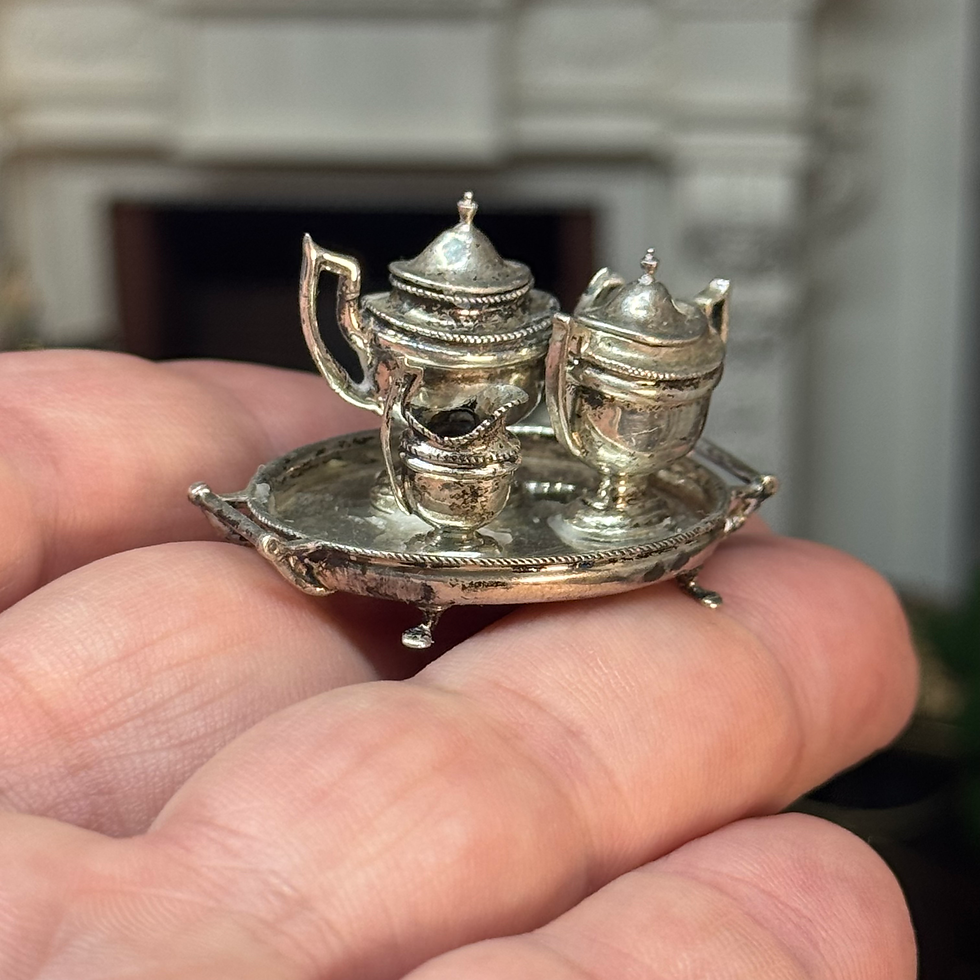
Sterling silver miniatures have an elegance that never goes out of style. Tea services, candlesticks, serving trays, and table accessories bring sophistication to a miniature setting while showcasing remarkable metalworking skills. They're timeless pieces that collectors continue to treasure generation after generation. This set by the inimitable Pete Acquisto is a must have for any artisan collector and one his most beautifully proportioned and designed sets.
7. Paintings, Portraiture & Watercolors

Art within art has always appealed to me. Miniature paintings don't simply decorate a dollhouse wall—they often tell a story about the people who might live there. Landscapes, portraits, still lifes, and period artwork add personality and history to every room, making the miniature world feel complete. This work by Meg Romero is one of my absolute favorites. While I have an affinity towards period pantings like Dutch Masters and Renassiance era works, this modern abstract called out loud and clear to me and I had to have it!
8. Toys & Miniature Dolls

Miniature toys remind us that every dollhouse has room for imagination. Tiny teddy bears, rocking horses, pull toys, dolls, games, and children's books instantly add charm and nostalgia. They're often conversation pieces that bring a smile to collectors of every age. This one serves a dual swoon purpose, being a classic toy inside a hardwood box!
9. Hardwood Boxes

If you've followed me for any length of time, you've probably noticed my affection for miniature boxes. They really make me swoon like no other category of small things. Jewelry boxes, document boxes, sewing boxes, storage boxes, and decorative boxes all invite you to wonder what's inside. Some even open to reveal beautifully crafted surprises, making them miniature treasures within miniature treasures. This stunning hardwood box by the masterful miniaturist Chris Malcomson is one of my absolute prized possessions and I am ery grateful to own of his creations.
10. Copperware and Vintage Kitchen Utensils

Copper has a warmth that immediately catches my eye. Pots, kettles, molds, cookware, and kitchen accessories develop a rich character that feels both historic and welcoming. Whether polished to a brilliant shine or aged with a beautiful patina, copper miniatures always add authenticity to a scene. I love the challenge of finding a new piece in a new form, shape or purpose to add to my collection. I have my eye currently on a large copper wash basin that I want to add to my collection.
The Joy Is In Discovering What Speaks to You
One of the wonderful things about collecting artisan and quality crafted dollhouse miniatures is that no two collections are ever exactly alike. What excites one collector may not interest another, and that's exactly as it should be. Your collection becomes a reflection of your personality, your memories, and the craftsmanship that speaks to you. Over the years, I've learned that collecting isn't about owning everything—it's about discovering the pieces that bring you genuine joy.
What type of dollhouse miniatures do you find yourself collecting over and over again? Is it furniture? Flowers? Food? Something completely different? And if you're considering selling a miniature collection—or you've inherited one and aren't sure where to begin—I'm always happy to help. Helping collectors and families find the right next homes for artisan and quality crafted dollhouse miniatures has become one of the most rewarding parts of what I do!
###


