top of page

As the owner of D. Thomas Miniatures, I’ve handled hundreds of awesome and some exceptional artisan works—pieces created by human hands, shaped with skill, patience, and the kind of intimate attention machines could never imitate. Every once in a while, I come across a miniature full of soul, that it stops me in my tracks.


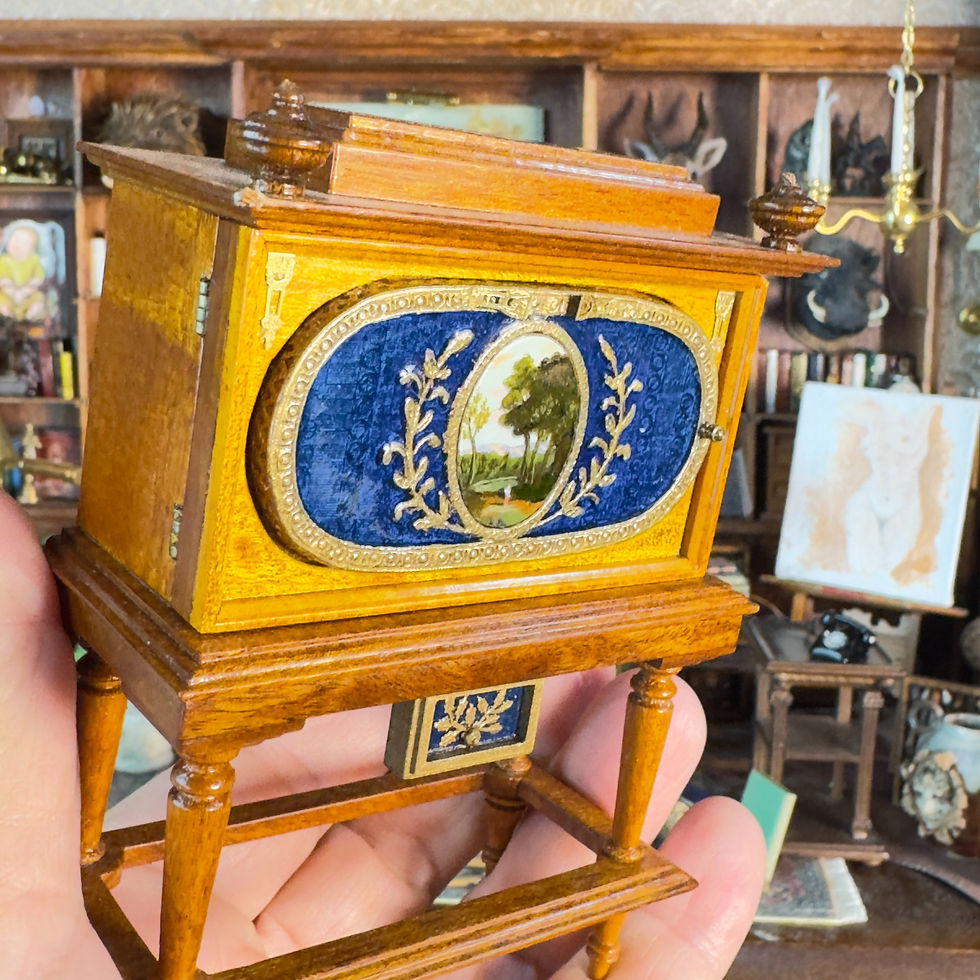
Recently, that moment arrived upon cataloguing an estate auction (starting on Sunday, November 30 in my eBay store) I am prepping in the form of a hand-crafted hardwood side table, possibly made from exotic woods, its tabletop decorated with meticulously executed inlay and its legs adorned with likely custom-made brass fittings and embellishments.


It is special. It's lovely. And… it’s imperfect.


I'm in the business of finding new homes for pre-owned dollhouse miniature treasures, mostly the estates of collectors who have moved on or those who don't want to wait and prefer to downsize while they are still here. And I really felt like this piece deserved a new home where it will be adored and treasured. In addition to some nicks and other subtle markings, the main defect is that several tiny brass fittings on the legs and back have gone missing. That’s it. Absent flourishes on an otherwise masterful piece of miniature furniture. And as I held this table in my hands, I felt the need to defend it—to speak for it, even. Because in a world obsessed with pristine perfection, down to the tiniest of detail, I believe deeply in the value of the beautifully imperfect.


A Masterwork, Even in Its Flaws

You can feel the time an artisan spent selecting hardwoods with the right grain. You can see the hand guiding a tool to carve the edge, shape the apron, add the inlay. You can imagine the tiny moments of joy and frustration as those custom brass fittings were formed, polished, and applied. This miniature table wasn’t mass-produced.It wasn’t laser-cut.It wasn’t factory finished, it was made—piece by piece, decision by decision, by a skilled artisan whose hands have likely created treasures for decades. That labor doesn’t disappear because a fitting is missing. If anything, it reveals the story.

The Beauty of Imperfection in Miniature Collecting

Collectors often chase perfection—and who can blame them? Artisan dollhouse miniatures are feats of craftsmanship. They are small but monumental. But perfection is only one story a miniature can tell. This table tells another. It tells the story of time. Of use. Of the gentle wear that reminds us these pieces lived before they reached us.


This table’s imperfection adds character, the way a rubbed edge on an antique does or a faint scratch on a real 18th-century highboy makes it human, historic, real.

In miniature collecting, we often forget that artisans aren’t machines—their work reflects not only skill but spontaneity, and yes, sometimes fragility.


Why This Table Deserves a Loving New Home

I believe wholeheartedly that this miniature deserves a collector who will recognize its worth not just in materials, but in meaning.

Here’s why:

1. The craftsmanship is exceptional.

The woods, the inlay, the custom brass work—this is work from an artisan who knows their craft. The detail rivals the real world.

2. Its imperfection does not diminish its artistry.

The missing fitting is an easy repair for those who want it restored—or a treasured quirk for the collector who embraces authenticity.

3. It carries a story forward.

Many collectors value provenance, patina, and history. This piece has lived a little, and that is something to cherish.

4. Beautiful miniatures shouldn’t be discarded over minor flaws.

We honor artisans by valuing their work holistically, not dismissing it when time leaves a mark.

How to Appreciate (and Display) an Imperfect Miniature

Even “imperfect” pieces can shine—sometimes even brighter.

  • Display it thoughtfully, perhaps with lighting that emphasizes the inlay and woodgrain.

  • Consider commissioning a replacement fitting if restoration appeals to you.

  • Or choose to leave it as-is, celebrating its authenticity and life story.

  • Use it in a roombox or scene where the missing fitting becomes nearly invisible, but the workmanship steals the spotlight.

There is no wrong way to love an artisan miniature.


Let’s Champion Imperfect Beauty

As the curator and caretaker of countless works of miniature artistry, I want to encourage collectors to broaden their view of what makes a miniature “worthy.” Art is not diminished by imperfection. Often, it is defined by it.


This handcrafted hardwood side table—with its exotic wood inlay, its custom brass accents, its unmistakable artisan touch—deserves admiration. It deserves a home. It deserves someone who will cherish it not in spite of its imperfection, but alongside it.

If you’re that collector—the kind who sees beauty in craft, not just condition—then this table is waiting for you.


And I hope you give it the perfect home it deserves. Stay tuned for more as I put this latest estate collection together and make it ready for sale. If you have a collection you are looking to have sold, or interested in downsizing, please contact me so we can talk about how to find new homes for your adored treasures, the perfect AND the imperfect!


###


Written with the help of AI and edited by Darren Scala!


Dollhouse miniatures capture the charm of everyday objects in tiny form, but not all miniatures are created equal. Artisan-crafted miniatures stand apart from mass-produced ones through their unique details and craftsmanship. Knowing how to spot these differences helps collectors, hobbyists, and enthusiasts appreciate the artistry behind each piece and make informed choices when adding to their collections.

Understanding the Craftsmanship


Artisan dollhouse miniatures are made by skilled craftspeople who focus on quality and detail. Unlike mass-produced miniatures, which often rely on machines and molds, artisan pieces are usually handcrafted or finished by hand. This difference in production methods leads to several key identifiers:


  • Material quality: Artisans select premium materials such as fine woods, metals, or hand-mixed clays. Mass-produced items often use cheaper plastics or composites.

  • Attention to detail: Look for subtle imperfections that show handwork, such as slight variations in paint strokes or textures.

  • Unique designs: Artisan miniatures often feature original or limited-edition designs, while mass-produced ones tend to repeat the same patterns.


Signs of Handcrafted Work


One of the clearest signs of an artisan miniature is the presence of hand-applied finishes. For example, hand-painted details will have slight inconsistencies that add character. Mass-produced miniatures usually have uniform, machine-applied paint that looks flat or overly perfect.


Check the edges and joints of the miniature. Artisan pieces often show careful sanding and fitting, while mass-produced items may have visible mold lines or rough edges. The use of tiny nails, pins, or glue spots can also indicate hand assembly.

Scale and Proportion Accuracy


Artisan miniatures tend to maintain accurate scale and proportions relative to real-life objects. This precision reflects the maker’s knowledge and dedication. Mass-produced miniatures sometimes sacrifice scale accuracy for ease of manufacturing or cost savings.


For example, a handcrafted miniature chair might have realistic seat height and leg thickness, while a mass-produced version could look slightly off or simplified. Comparing pieces side by side can reveal these differences clearly.

Materials and Textures


The choice of materials often distinguishes artisan miniatures. Wood grain, metal patinas, and fabric textures in handcrafted pieces feel more authentic. Mass-produced miniatures may use painted plastic or synthetic fabrics that lack depth.


Touch the miniature if possible. Artisan pieces often have a weight and texture that feels natural. For instance, a miniature wooden table will have a smooth but tactile surface, while a plastic one might feel hollow or overly smooth.

Packaging and Documentation


Artisan miniatures frequently come with certificates of authenticity or information about the maker. This documentation adds value and confirms the piece’s origin. Mass-produced miniatures rarely include such details.


Packaging can also be a clue. Handmade miniatures might be wrapped carefully in tissue paper or placed in custom boxes, while mass-produced items often come in generic plastic packaging.


Price and Availability


Price can be an indicator but not a definitive factor. Artisan miniatures generally cost more due to the labor and materials involved. Limited availability also sets them apart, as artisans produce smaller quantities.


If a miniature is widely available at very low prices, it is likely mass-produced. Conversely, unique pieces sold at craft fairs, specialty shops, or online artisan platforms tend to be handcrafted.

Examples to Illustrate Differences


  • Miniature Furniture: An artisan-crafted wooden rocking chair will show fine carving details, natural wood grain, and hand-applied finish. A mass-produced plastic chair might have visible mold lines and uniform paint.

  • Miniature Food Items: Hand-sculpted miniature pastries often display realistic textures and color variations. Mass-produced versions may look glossy and identical.

  • Miniature Accessories: Artisan jewelry or household items might use real metal and glass components, while mass-produced ones rely on painted plastic.

Why It Matters to Collectors and Hobbyists


Recognizing artisan miniatures helps collectors value the skill and time invested in each piece. It also supports small-scale artists and preserves traditional crafting techniques. For hobbyists, choosing artisan miniatures enhances the authenticity and uniqueness of their dollhouse scenes.


Final Thoughts on Identifying Artisan Dollhouse Miniatures


Spotting artisan dollhouse miniatures involves looking closely at materials, craftsmanship, scale, and packaging. These clues reveal the difference between a mass-produced item and a piece made with care and skill. When you learn to identify these features, you gain a deeper appreciation for the miniature world and make choices that reflect your passion for quality and artistry.


If you are looking to downsize your collection of artisan and quality crafted dollhouse miniatures, please be sure to reach out and let's talk about how we can work together to find new happy homes for your treasures!


Building an artisan dollhouse miniature collection is a journey filled with passion, creativity, and countless memories. You’ve probably spent years attending miniature shows, connecting with artisans, and carefully curating exquisite pieces. Every miniature tells a story—and together, they showcase your artistry and passion as a collector.


But what happens when it’s time to downsize your miniature collection? For many collectors, this stage can feel overwhelming or emotional. These pieces aren’t just objects; they’re works of art representing talent and dedication. However, downsizing doesn’t have to feel like a loss—in fact, it can be one of the most rewarding chapters in your collecting journey.


Why Downsize a Miniature Collection?


Life Transitions – Moving to a smaller home? Downsizing for retirement? Sometimes collections outgrow the space we have for them.

Sharing the Joy – Passing your miniatures to other collectors allows these treasured pieces to continue being loved and displayed.

Preserving Value & Legacy – Rather than leaving your collection in storage, selling or consigning miniatures ensures they remain in circulation and appreciated for years to come.


Benefits of Passing Pieces to New Collectors

  • Honor the Artists – Every miniature in your collection represents hours of skill and creativity. Downsizing gives their work new life and continued recognition.

  • Protect Your Investment – Professional representation ensures your pieces are sold for fair market value.

  • Keep Your Curatorial Role – Downsizing is a continuation of your legacy as a collector. You’re still shaping the future of these pieces by choosing where they go.


Why Partner with D. Thomas Fine Miniatures?


Downsizing is more than a transaction—it’s about respect, trust, and legacy. At D. Thomas Fine Miniatures, we specialize in selling dollhouse miniatures, consigning miniature collections, and connecting collectors with the right buyers.


When you work with us, you’ll receive:✔ Expert Evaluation – Accurate representation of your artisan miniatures for the best pricing .✔ Global Reach – We connect your collection to serious collectors worldwide.✔ Professional Marketing – High-quality photography, detailed descriptions, and featured exposure on our website, social media, and curated sales events.✔ Personalized Service – We handle everything from start to finish so you can downsize stress-free.


The Beauty of Letting Go

Downsizing your miniature collection is not about giving up—it’s about continuing the story. When done thoughtfully, it honors the artisans, your role as a curator, and the passion that built your collection.


Ready to start the next chapter?👉 Contact D. Thomas Fine Miniatures today for a private consultation on how to sell or consign your dollhouse miniatures with integrity and care.📩 Visit www.dthomasfineminiatures.com to learn more.


###

bottom of page