
What Puts the “Fine” in Fine Art Furniture in Miniature?
What separates a beautifully made dollhouse miniature from a piece of fine art furniture in miniature?
It is a question worth asking, particularly as a collector begins to look beyond simply acquiring pieces that appeal to them and starts to recognize the artistry, skill and ingenuity behind truly exceptional miniature furniture. The answer is rarely just one thing.
It can begin with the selection of a remarkable piece of wood and an artisan’s ability to understand exactly how its grain should be positioned. It may be found in a nearly impossibly small hand-cut dovetail, an intricate decorative inlay, a perfectly carved cabriole leg, or a finish that convincingly suggests a century of use. Sometimes it is a working mechanism or a hidden compartment that you would never know existed until you looked more closely.
And almost always, it comes down to scale and proportion. The finest miniature furniture does not simply reproduce a full-size object in smaller dimensions. It captures its presence. Remove the clues that tell you its size, and for a moment you might believe you are looking at the full-size original. That is part of the magic.
My current Fine Art & Masterful Miniatures Estate Sale gives us a wonderful opportunity to look more closely at exactly what that means. I have selected ten pieces from the collection, each illustrating a different quality worth recognizing. For the budding collector, these are details that can help you begin identifying exceptional work. For the experienced collector, they are reminders of just how much artistry can be contained within twelve inches to the foot.
John Hodgson: Tilt Top Oval Table

Sometimes fine miniature furniture begins with the material itself. John Hodgson’s oval tilt-top table is an extraordinary example of an artisan understanding the natural beauty of wood and knowing how to make it an integral part of the design. The remarkable burl wood is not simply a material from which the table was constructed. Its swirling grain becomes part of the composition.
The individual pieces have been selected and positioned so that their patterns work together across the oval top, while contrasting banding defines the perimeter. That distinction is important. A fine furniture maker does not simply use beautiful wood. The maker reads the wood, selects it and positions it so that nature and craftsmanship become part of the same design.
William Klinger with Dolores and John Renninger: Windsor Style Colonial Bench
Fine miniature furniture can also be the result of several artistic disciplines coming together.
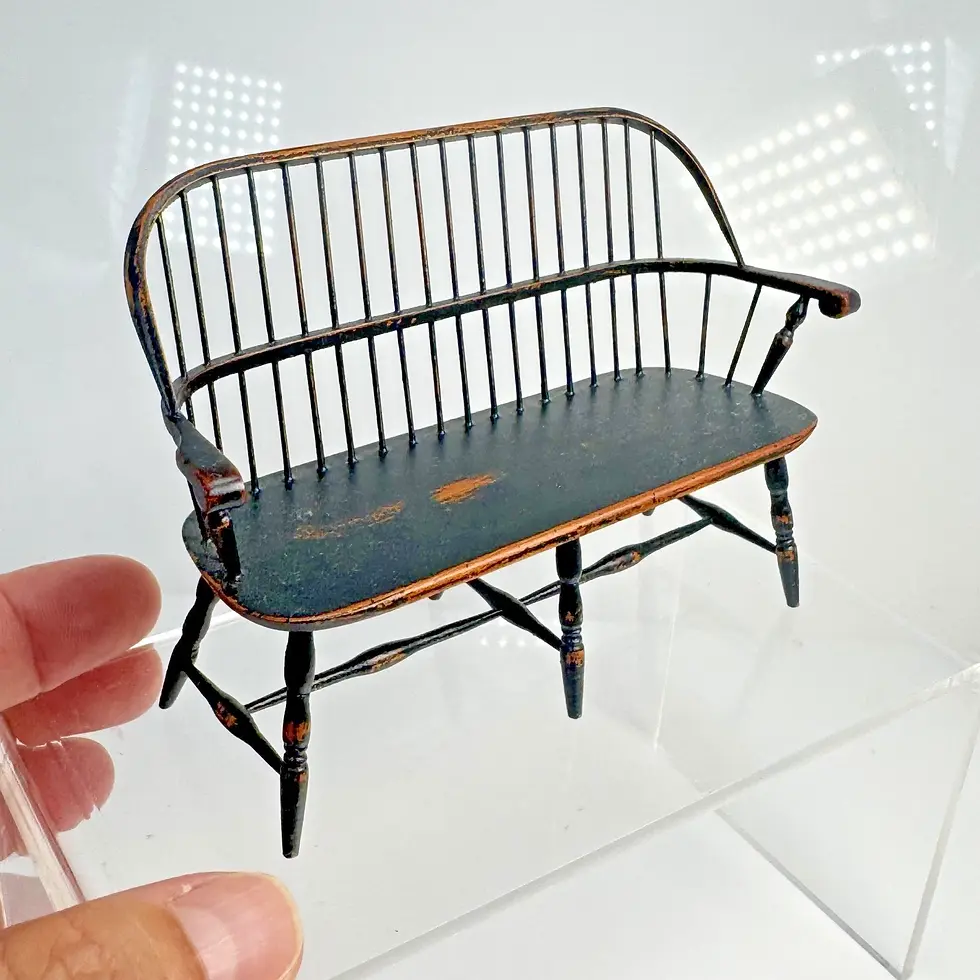
This hardwood Windsor-style Colonial bench by William Klinger features beautifully executed spindle work and construction. But then another layer of artistry is introduced through the work of Dolores and John Renninger.
Their specialized painted aging and weathering techniques transform the piece. The bench does not look freshly constructed. Its finish suggests history. Areas appear naturally worn, as though generations of people have actually sat upon it. That ability to convincingly create age, use and history in miniature elevates the piece beyond construction alone. It creates an illusion of a life already lived.
Michael Walton: Demi Lune Commode

Decorative inlay is one of those details that can be appreciated aesthetically without immediately understanding just how difficult it is to execute. Michael Walton’s demi lune commode demonstrates why it deserves closer attention. The beautifully rounded form is already an exercise in proportion and construction.
But it is the intricate decorative inlay that takes the piece to another level. Tiny pieces of contrasting woods must be cut, fitted and arranged into precise decorative patterns. At miniature scale, tolerances become extraordinarily small. A fraction of an inch can make the difference between elegance and something that simply looks out of proportion. Here, the precision of the inlay complements the graceful curved form rather than overwhelming it.
Patrick Puttock: Oval Burl Wood Desk
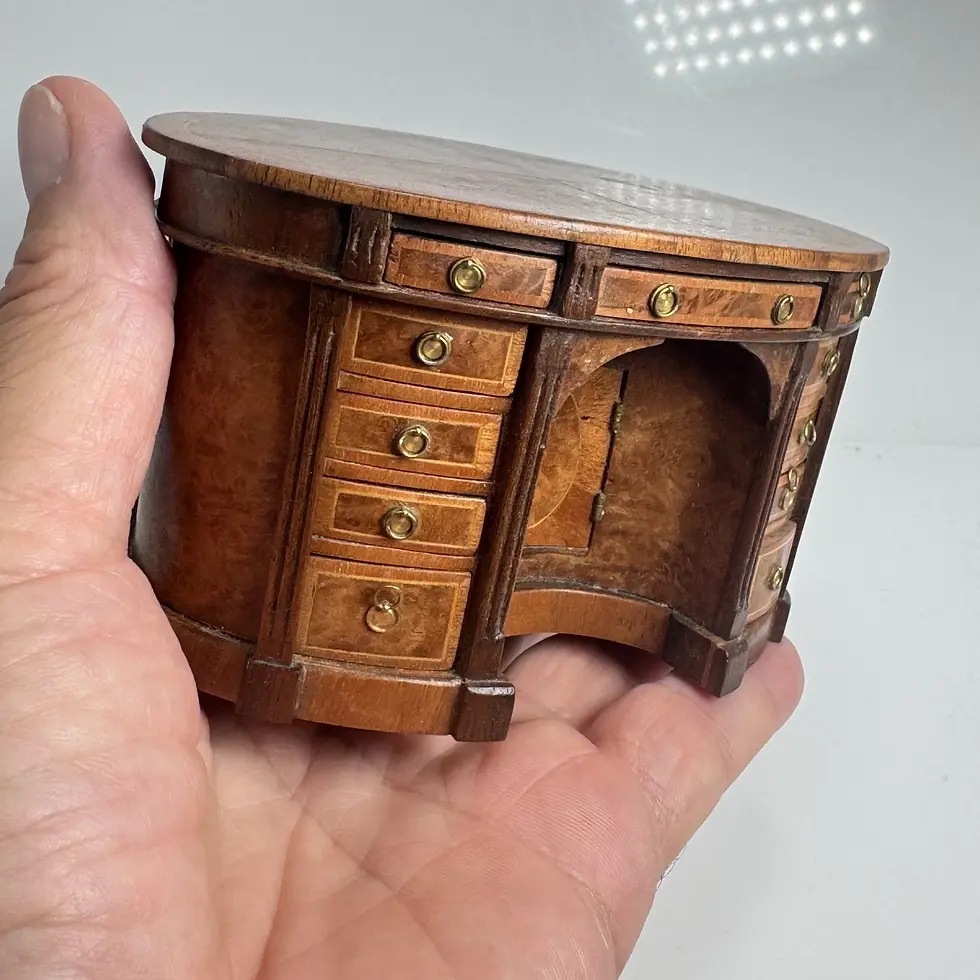
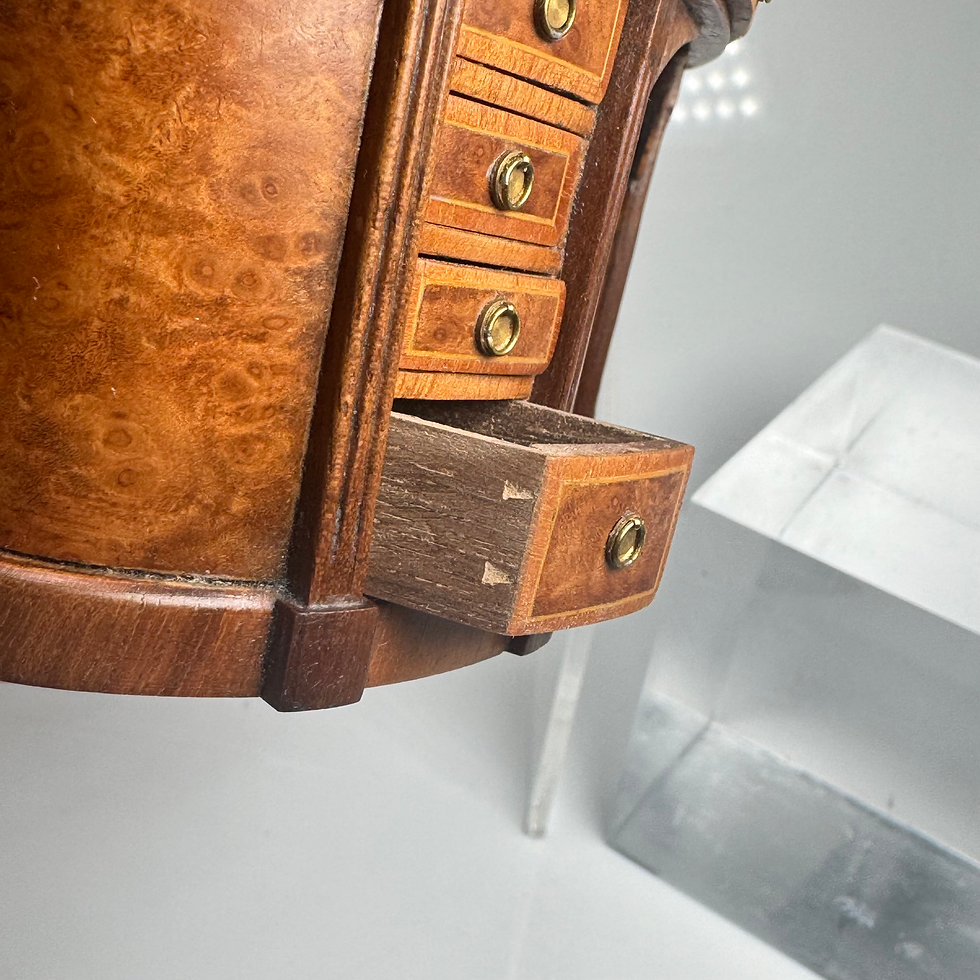
Sometimes you need to open a drawer. Patrick Puttock’s remarkable desk gives us plenty to admire before we ever do. There is the richly figured burl wood, the custom banding, the graceful kidney-shaped form, decorative inlay across the drawers and even a concealed door beneath the desk. Then pull out one of its eleven drawers. There you discover tiny hand-cut dovetails.
This is one of my favorite characteristics of fine miniature furniture because much of the craftsmanship is almost invisible when the piece is displayed. The artisan could have chosen an easier construction method. Instead, the drawers are constructed using traditional furniture-making techniques at miniature scale. That is craftsmanship intended not merely to be seen, but to be discovered.
Ernie Levy: Burl Wood Mantle Clock and Pedestal
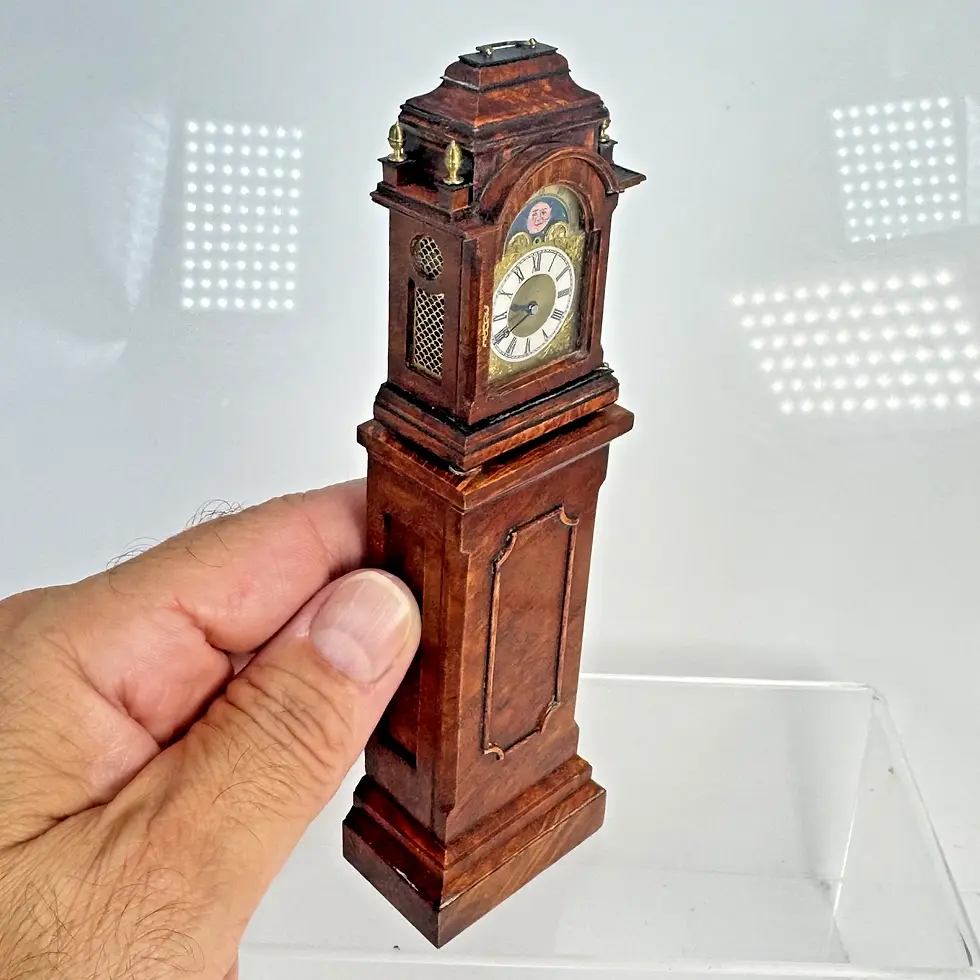
Ernie Levy’s two-piece mantle clock and pedestal illustrates another characteristic of exceptional miniature furniture: engineering. There is already an extraordinary amount to appreciate visually. Beautiful burl wood, delicate metal fretwork, a hand-painted clock face, brass finials and hardware, an opening door on tiny brass hinges, and carefully executed decorative details all contribute to the piece.
But look closer. A metal pin secures the mantle clock to its pedestal. The mechanism swivels, allowing the clock to be released and removed. It is a tiny detail, but an ingenious one. Fine miniature furniture frequently rewards interaction. Things open. Things move. Things come apart. Mechanisms work. The artisan has considered not only how the piece will look but how it will function.
Joan Tucker: “Little Ruffles” Dressed Canopy Bed
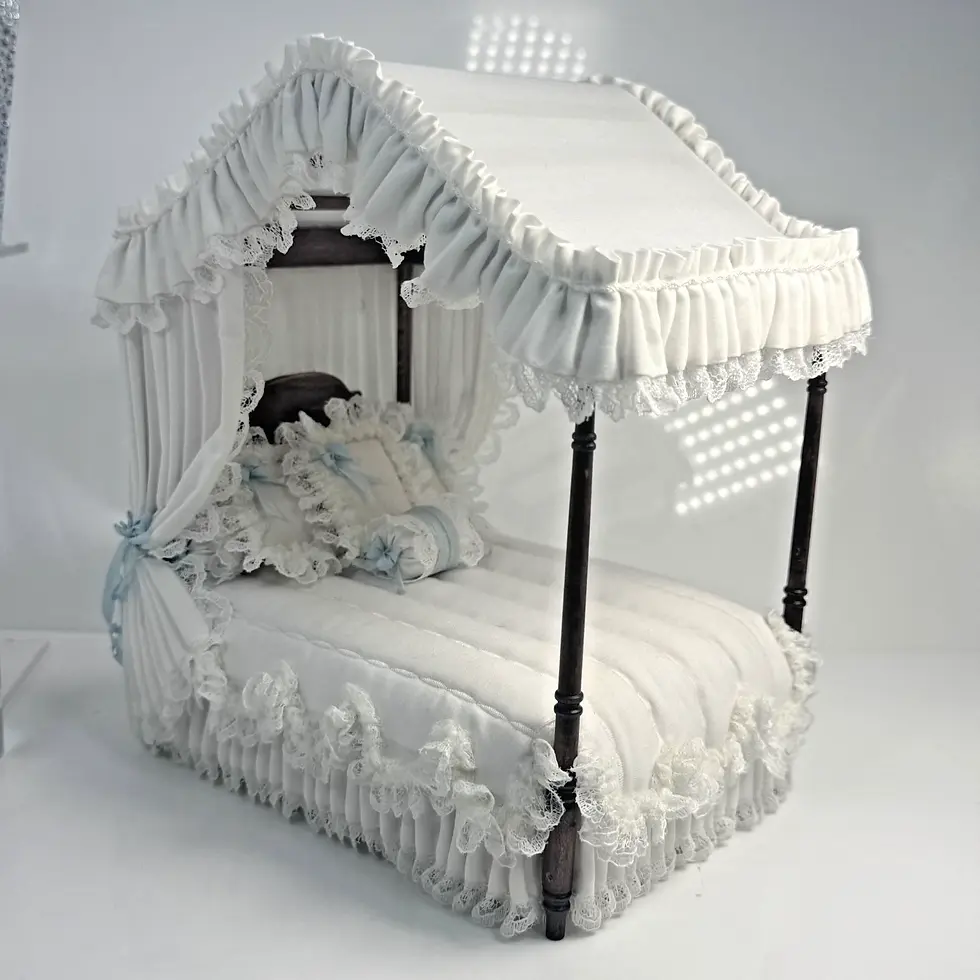
Fine furniture in miniature is not limited to woodworking. Joan Tucker’s Little Ruffles canopy bed demonstrates what happens when beautifully made miniature furniture is brought together with exceptional textile work. The hardwood bed features finely proportioned construction, likely hand-turned posts and a satiny finish that allows the natural wood grain to remain visible. But the dressing of the bed becomes an equally important part of the composition.
Fabric must behave convincingly at miniature scale, which is no small challenge. The canopy, bows, ruffles and decorative elements must all be scaled appropriately so they do not overwhelm the furniture beneath them. The result combines craftsmanship with softness and whimsy while maintaining the illusion of full scale.
Julian Biggers: Folding Gaming Table
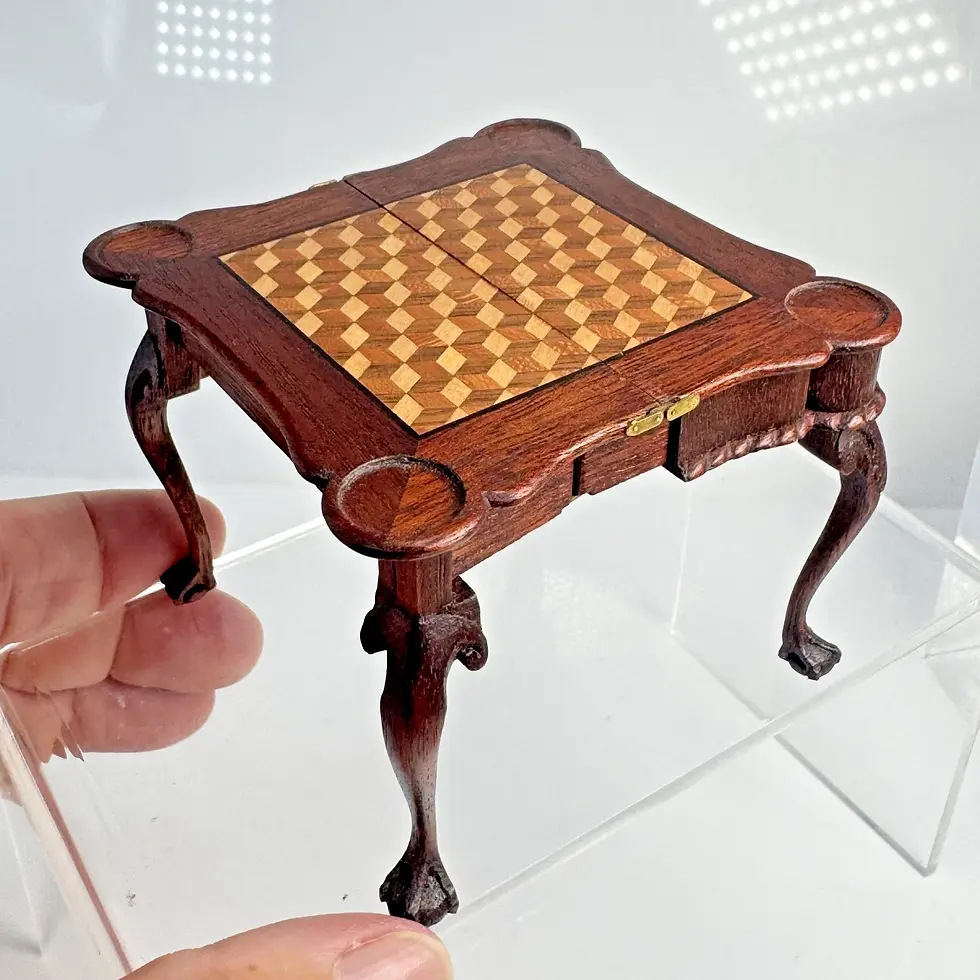
At first glance, Julian Biggers’ piece might appear to be an elegant table intended to sit against a wall. And then it transforms. This is a metamorphic piece of furniture. The table opens and expands from its compact form into a full gaming table, incorporating working brass hardware and a beautifully inlaid playing surface. Its carved cabriole legs terminate in claw-and-ball feet, and sculpted and carved details continue throughout the piece.
What makes it particularly exciting, however, is that the transformation is not a miniature gimmick. It reflects the ingenuity of full-size furniture designed to perform more than one function while conserving space. The miniature artisan has therefore reproduced not simply the appearance of the furniture, but its purpose and engineering.
Patrick Puttock: Twin Arch Burl Wood Cabinet
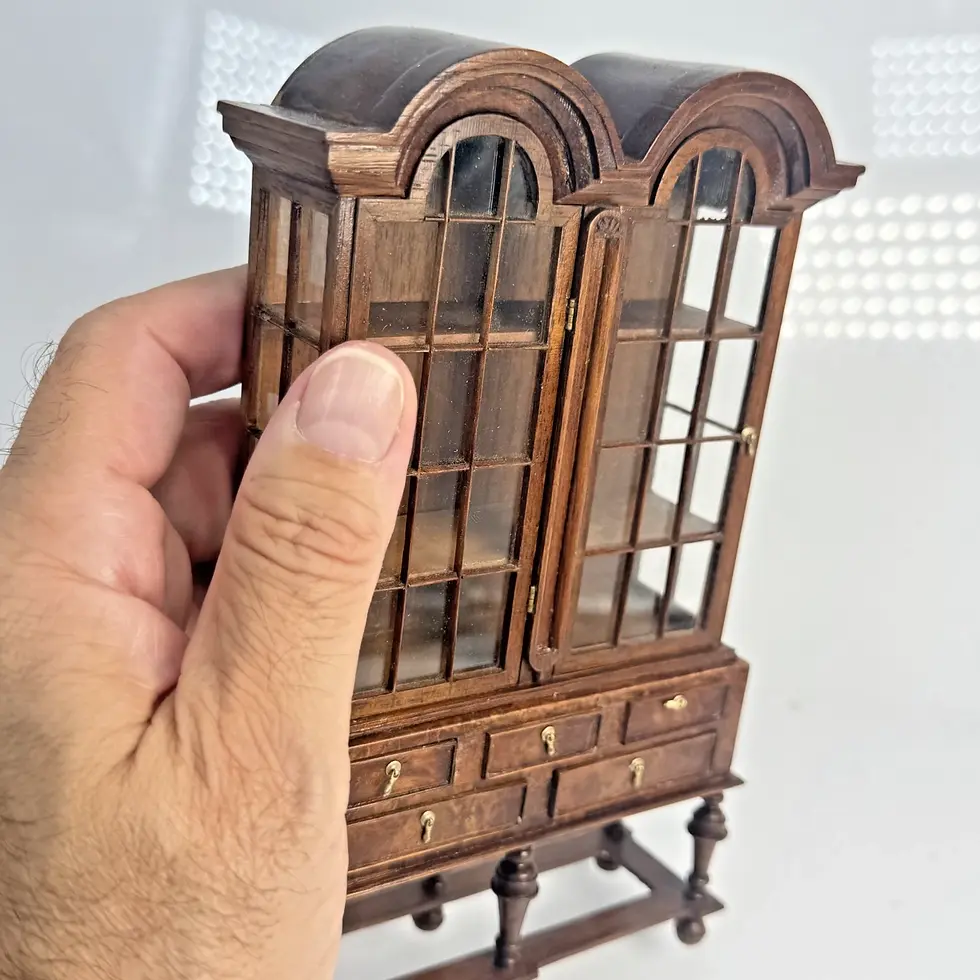
Patrick Puttock’s twin arch cabinet gives us another lesson in precision. The beautiful burl wood immediately attracts attention, as do the brass hardware and beautifully proportioned double-arch architectural form. Then look at the doors. The glass is real, and the tiny muntins dividing those glass panels must be cut and assembled with extraordinary precision.
At full scale, architectural elements such as these provide rhythm and proportion. In miniature, even the slightest discrepancy can become visually obvious. The success of this cabinet lies in how natural everything appears. That effortlessness is deceptive. Achieving it requires tremendous control of scale, symmetry and proportion.
Charles “Chuck” Krug: Sculpted Side Table
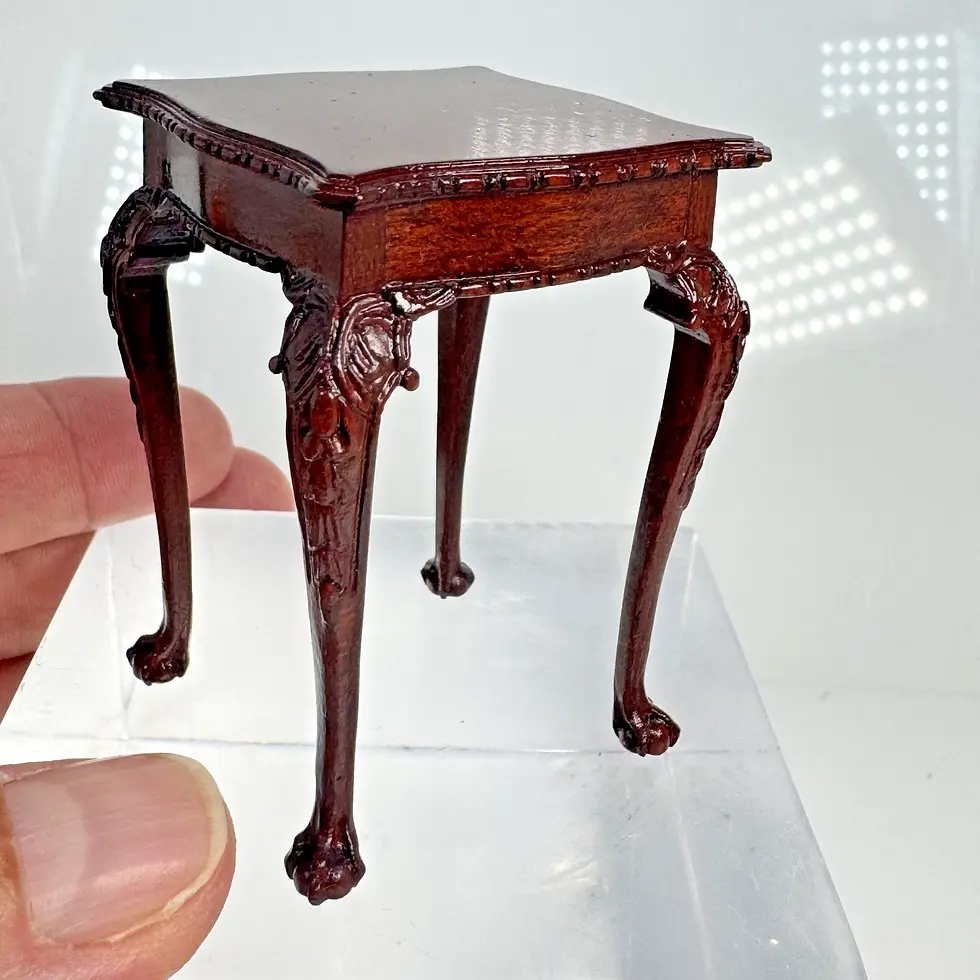
A beautifully carved leg can tell you a great deal about a miniature furniture maker. Charles “Chuck” Krug’s sculpted side table features hardwood construction with a rich stain and satiny finish that allows the natural grain to remain visible. But follow your eye downward.
The beautifully curved cabriole legs are hand sculpted and carved, terminating in wonderfully executed claw-and-ball feet.
Carving at this scale presents an unusual challenge. The details must be crisp enough to read clearly, yet restrained enough to remain believable at scale. Too heavy, and the furniture becomes visually cumbersome. Too delicate, and the design loses its character.
Here, carving, proportion and scale work together. It is not simply a small carved table. It is a convincing piece of furniture that happens to exist in miniature.
Gerald Crawford: Tilt Top Table with Hidden Drawers
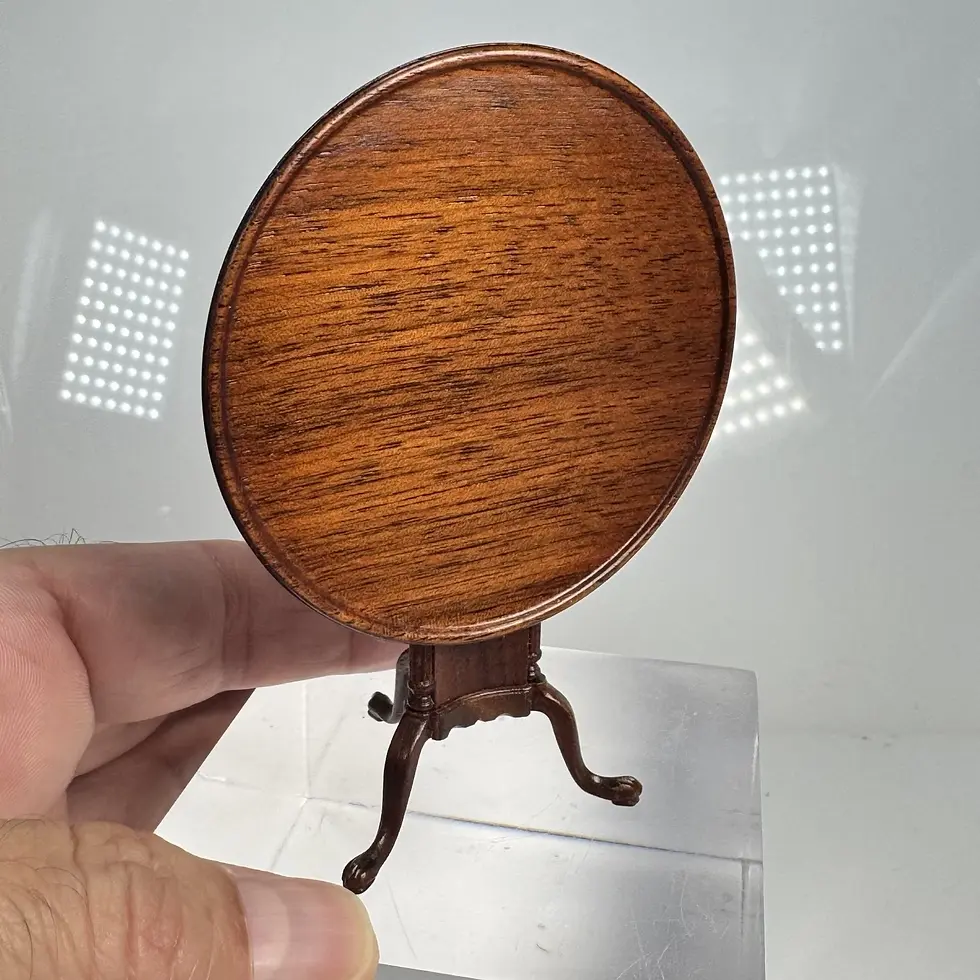
And finally, there is something I particularly love in a fine miniature: the surprise. Gerald Crawford’s tilt-top table is beautifully proportioned and constructed, with a working mechanism that gently moves the top between its upright and table positions. That alone demonstrates considerable craftsmanship.
But the real delight is hidden within the column. A tiny door opens to reveal concealed drawers incorporated into the structure of the table. Suddenly, what appeared to be a beautifully made miniature becomes something more. It invites discovery. And importantly, this ingenuity reflects the kind of inventive construction found in full-size furniture. The miniature maker has captured not simply what the original furniture looks like, but the experience of encountering it: opening it, operating it and discovering something unexpected. There is tremendous joy in that.
Learning to Look More Closely
These ten pieces are very different, yet taken together they give us a vocabulary for recognizing fine art furniture in miniature. Look at the materials. Has the maker simply used hardwood, or deliberately selected grain, burl and contrasting woods to become part of the design? Look at the construction. Open the drawers. Examine the joinery. Look underneath. The craftsmanship you cannot immediately see can be every bit as revealing as what is displayed prominently. Look at scale and proportion. Does the piece merely look small, or does it convincingly look like full-size furniture reduced to miniature? Look at the finish. Does it enhance the grain? Does painted aging suggest decades of use? Does upholstery or fabric behave convincingly at scale? Look for complexity and ingenuity. Does something open, tilt, fold, swivel or transform? Are there concealed drawers, working hinges or mechanisms?
And finally, look for artistry. Technical perfection alone does not necessarily create a great work of miniature art. The finest makers bring judgment to their work: knowing which piece of wood to select, where to place an inlay, how deeply to carve a detail, how much aging is enough, and when to stop. For collectors, learning to recognize these qualities changes the experience of collecting. You begin to look closer. You begin to turn pieces over, open drawers, study grain, notice joinery and recognize the extraordinary amount of work contained within something that can sit in the palm of your hand. And perhaps that is what really puts the fine in fine art furniture in miniature. It isn't simply that these pieces are beautifully made. It is that the closer you look, the more there is to see!
###


